

Annual Backflow Testing in Frisco and Plano: When to Call in the Pros
Published at September 30, 2026 | Category: Backflow Testing
Frisco and Plano both require testable backflow prevention assemblies on lawn irrigation systems to be tested at least once every twelve months by a Texas Commission on Environmental Quality licensed Backflow Prevention Assembly Tester who is also registered with that specific city. Plano additionally requires a retest immediately after any installation, relocation, repair, or work performed upstream of the assembly, and the report must reach Utility Operations within ten calendar days. Frisco manages its annual testing records through BSI Online and charges a per device fee set by the city. Homeowners cannot legally test their own assembly, which is why the annual notice from the city is a signal to call a licensed professional rather than a reason to reach for a screwdriver.
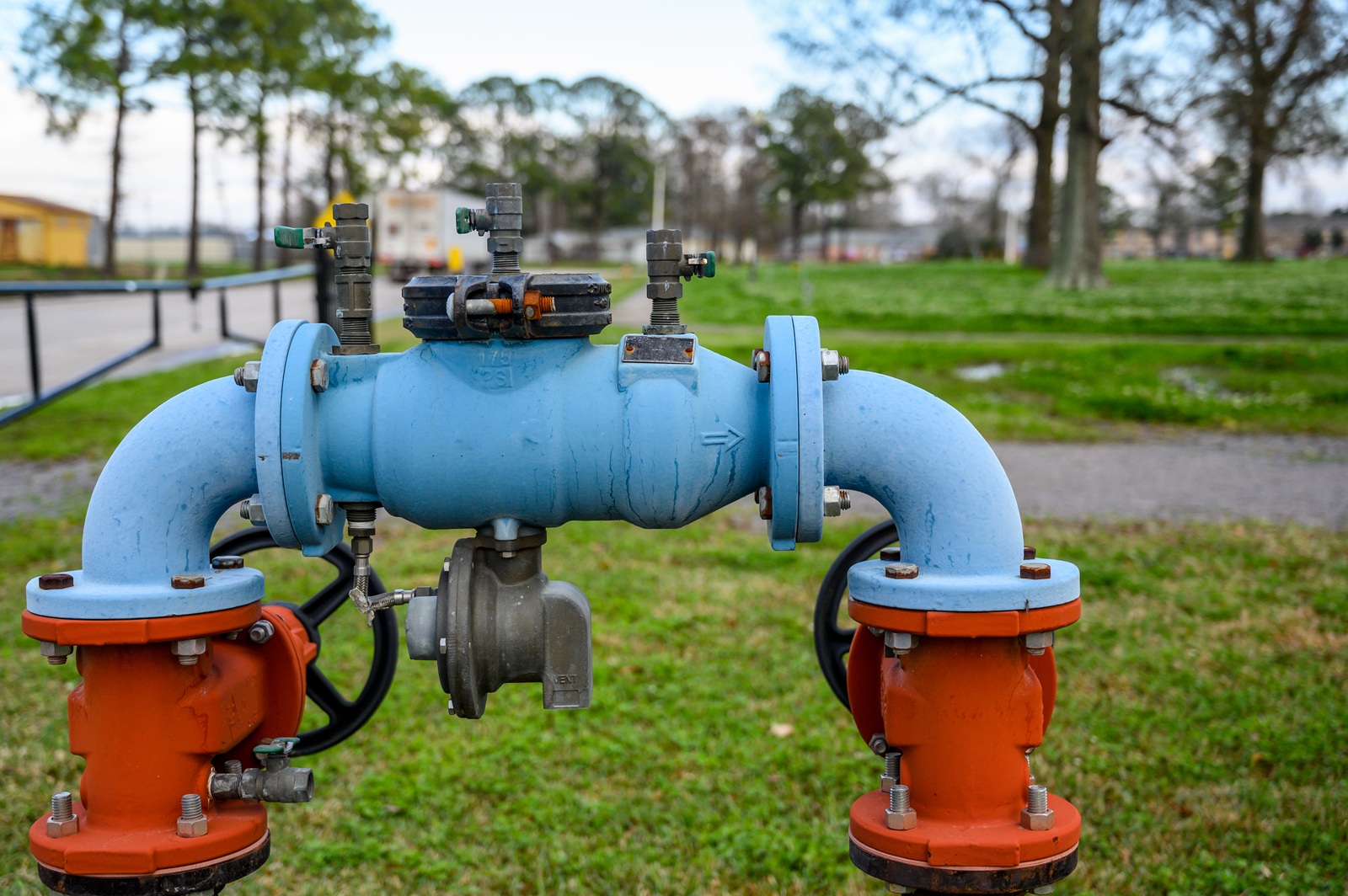
If a notice from the City of Frisco or the City of Plano just landed in your mailbox asking for a backflow prevention assembly test report, you are not being singled out. Nearly every home in Frisco and Plano with an in ground sprinkler system has a testable backflow assembly sitting between the water meter and the irrigation zones, and both cities require that assembly to be tested every year by a licensed professional.
What the notice does not explain is who is allowed to do the test, how quickly the report has to reach the city, what happens when the assembly fails, and why the two cities handle the same state requirement in noticeably different ways. This guide covers all of it, with the local rules that actually apply in Collin County.
What Is Annual Backflow Testing, and Why Do Frisco and Plano Require It?
Backflow is the reversal of water flow inside a plumbing system. Instead of clean water moving out to your sprinkler heads, a drop in pressure on the city main or a pressure spike on your side of the meter can pull water back toward the public supply. Because that water has been sitting in pipes buried under a lawn treated with fertilizer, pre emergent, and pest control products, the public water system has a clear interest in stopping it.
A backflow prevention assembly is the mechanical barrier that stops it. It uses spring loaded check valves, seats, and seals to hold water in one direction. Those are wearing parts. Springs weaken, rubber seats harden and crack, debris scores a sealing surface, and mineral scale builds on internal components. None of that is visible from the outside, which is the entire reason for an annual test. The assembly can look perfect and still fail to hold.
Under Title 30 of the Texas Administrative Code, a testable assembly protecting against a health hazard must be tested when it is installed and at least once every twelve months after that. Frisco and Plano both enforce that state floor through their own cross connection control ordinances, and both have added local requirements on top of it.
Who Is Legally Allowed to Test a Backflow Assembly in Texas?
Only a person holding a current Backflow Prevention Assembly Tester license issued by the Texas Commission on Environmental Quality. The TCEQ is explicit that anyone who tests or repairs the installation or operation of a backflow prevention assembly on a domestic, commercial, industrial, or irrigation service must hold that license. There is no homeowner exemption and no handyman exemption.
This is the single most misunderstood point in the whole process, so it is worth being precise about the credentials involved:
- A TCEQ licensed irrigator can design, install, repair, and service your sprinkler system, and can install the backflow assembly on it.
- A licensed plumber can install backflow assemblies on the potable water side of a property.
- Neither credential, by itself, authorizes the annual test. That requires the BPAT license.
- Fire line assemblies are a separate case. A tester can only work on a fire line if permanently employed by a fire sprinkler contractor registered with the state.
Both cities add a registration layer. Frisco requires the tester to be approved by and registered with the City of Frisco in addition to holding the TCEQ license. Plano requires the tester to be registered with the City of Plano Utility Operations Division, and the ordinance refers to that registered tester specifically as a Plano BPAT. A tester licensed by the state but unregistered in your city cannot file a valid report for your property.
One practical way to vet anyone who shows up at your house: ask what date the test gauge was last calibrated. Gauges have to be verified for accuracy on a recurring schedule, at least annually, and a legitimate tester will answer without hesitating.
How Frisco and Plano Handle Backflow Testing Differently
Both cities enforce the same state requirement, but the paperwork, the vendor, and the deadlines are not the same. If you own property in both cities, or you moved from one to the other, this is where people get caught out.
Requirement | City of Frisco | City of Plano |
Testing frequency | At installation, then annually for assemblies with test ports | Annually, plus immediately after installation, relocation, repair, or upstream work |
Who may test | A backflow prevention assembly technician approved by and registered with both the city and TCEQ | A TCEQ licensed tester registered with Plano Utility Operations, referred to in the ordinance as a Plano BPAT |
Report handling | Administered through BSI Online, a third party backflow data management firm partnered with the city | City of Plano test report form completed by the tester and submitted to the Utility Operations Division |
Filing deadline | Ten business days to provide results for a newly installed system under the irrigation ordinance | Ten calendar days after testing, repair, replacement, or upstream work |
Copy left with owner | Results provided to the system owner or owner's representative | Required by ordinance to be left on site with the owner or person in control of the premises |
Accepted test procedure | Follows TCEQ approved methods and local plumbing code | Only field test procedures approved by the USC Foundation for Cross Connection Control are accepted |
Device placement rule | Must be located no more than three feet from the water meter | Governed by the city cross connection control program and plumbing code |
Fees | A per device fee set by the city is charged for annual inspections, administered through BSI | A fee per assembly tested is paid when the technician files the report with the city |
The practical takeaway is that a Frisco report and a Plano report are not interchangeable documents filed the same way, and a tester who is set up in one city is not automatically set up in the other.
When Should You Schedule Backflow Testing in Frisco or Plano?
Most homeowners schedule reactively, when the notice arrives. There are five moments that actually trigger a test, and only one of them is the annual notice.
1. Your Annual Compliance Date
The clock runs twelve months from your last passing test, not from January. If your assembly was tested in July, your next test is due the following July regardless of what the calendar says. Keep the copy of the report your tester leaves with you, because that date is your reference point.
2. After a Hard Freeze
This is the North Texas variable that testing companies outside the region never account for. Building codes require these assemblies to sit above ground, usually twelve inches or more above finished grade, which puts a brass body full of standing water directly in the path of cold north wind. When that water freezes it expands, and expansion cracks brass, splits bonnets, and destroys internal poppets and relief valves.
Collin County gets sharp, short freeze events rather than a sustained winter, which is exactly the pattern that catches homeowners off guard. A mild December convinces everyone the system is fine, then a two day cold snap in January or February does the damage. The cracked assembly will not announce itself. It sits there looking normal until the test gauge says otherwise, or until the first spring watering cycle turns your parkway into a small pond. Scheduling the annual test in early spring, before watering season, is the cheapest insurance available.
3. After Any Repair or Work Upstream of the Assembly
This is the rule nearly every competing article leaves out, and in Plano it is written directly into the ordinance. Assemblies must be tested annually and also immediately after installation, relocation, repair, or any work performed upstream of the assembly. Replacing a meter side shutoff, correcting a main line break, relocating the assembly, or rebuilding internal components all reset the requirement.
So if a freeze cracked your assembly in February and it was repaired in March, the March repair requires its own test. Your annual test from the previous fall does not cover it.
4. On a New or Newly Placed System
A new irrigation system in Frisco must have its backflow device tested by a licensed tester before it goes into service, and the results have to reach the city and the system owner within ten business days of the test. If you are buying new construction in Frisco, ask the builder for that report rather than assuming it exists.
5. When You Add Chemical Injection
If any chemical is injected into an irrigation system connected to the potable supply, Frisco requires that system to be connected through a reduced pressure principle assembly or an air gap. A pressure vacuum breaker is not sufficient for that application. Homeowners who add a fertigation or injection setup to an existing system frequently miss this and fail the next inspection.
Which Backflow Device Is on Your Frisco or Plano Sprinkler System?
Knowing what you have makes the annual conversation much shorter. Three types cover almost every residential and light commercial irrigation system in Collin County.
Pressure Vacuum Breaker (PVB)
The most common device on North Texas residential sprinkler systems. A brass body mounted above ground with a bonnet on top and two small test cocks on the side. It protects against back siphonage and must be installed a minimum of twelve inches above the highest downstream outlet. It is also the device most often destroyed by freezing, because the bonnet assembly sits fully exposed.
Reduced Pressure Principle Assembly (RP or RPZ)
A larger assembly with two independent check valves plus a relief valve between them. It protects against both back siphonage and backpressure and is rated for high hazard applications, which is why Frisco requires it wherever chemicals are injected. If you see water intermittently discharging from a port on the underside, that relief valve is doing its job, and the assembly needs attention.
Double Check Valve Assembly (DCVA)
Two check valves in series, common on commercial premise isolation and some older residential installations. It handles low hazard conditions and is often installed below grade in a vault, which introduces its own problem: an assembly sitting in a flooded vault cannot be properly tested and usually cannot be approved.
One Frisco specific placement rule worth knowing is that the backflow prevention device must be located no more than three feet from the water meter. Older systems that have been modified over the years sometimes fall outside that distance, and correcting it is a relocation, which then triggers a new test.
What Actually Happens During a Backflow Test?
It is short, and you usually do not need to be home as long as the technician can reach the assembly and the isolation valve. A standard residential irrigation test runs roughly twenty to thirty minutes per assembly.
- The technician locates the assembly and confirms the make, model, size, and serial number against city records.
- The downstream shutoff is closed and a calibrated differential pressure gauge is connected to the test cocks.
- Each check valve is tested individually for tightness. On a reduced pressure assembly, the relief valve opening point is measured, and Plano requires at least a three pound per square inch differential between the first check and that opening point.
- Readings are recorded on the city’s report form. Plano only accepts field test procedures approved by the Foundation for Cross Connection Control and Hydraulic Research at the University of Southern California.
- The technician restores the assembly to service, leaves a copy of the completed report on site with the property owner, and files the original with the city inside the required window.
Water service to the irrigation system is interrupted only briefly. Household water is not affected in a normal residential test.
What Happens If Your Backflow Assembly Fails?
A failed test is not a citation. It is a repair order with a deadline. Most failures are ordinary wear: a check valve that no longer seats tight, a hardened rubber seat, a weakened spring, a relief valve that opens late, or debris lodged on a sealing surface. Many of these are repairable on site with a rebuild kit, and the assembly is retested immediately afterward.
Freeze damage is the exception. A cracked brass body cannot be rebuilt and the assembly has to be replaced, which in turn means a permit in most Collin County cities and a fresh test once the new assembly is installed.
This is also the point where a lot of Frisco and Plano homeowners discover an awkward gap. A dedicated backflow testing company can test the assembly and repair the assembly itself, but it cannot touch the irrigation system behind it. If the test reveals a leaking main line, a stuck zone valve, or heads that were damaged in the same freeze, that is a second contractor, a second appointment, and a second trip charge. A licensed irrigation company handles both in one visit. For a deeper look at repair scenarios, see our guide to backflow preventer repair for sprinkler systems.
Five Signs Your Assembly Will Not Pass This Year
You cannot self certify, but you can tell whether to schedule early. Watch for these:
- Continuous dripping or a steady discharge from the assembly when the system is off. Brief discharge during a pressure fluctuation is normal. Continuous discharge is not.
- A noticeable drop in sprinkler pressure across every zone at once, which often points at a fouled check valve rather than a broken head.
- Visible cracks, green corrosion staining, or a bonnet that looks bulged or seated unevenly after winter.
- Banging or shuddering in the line when zones switch, sometimes called water hammer.
- A missing, damaged, or previously opened test cock, which can prevent the test from being performed at all until it is replaced.
Any of these showing up in late winter is worth a call before your compliance date, not after. Pairing the check with a broader seasonal sprinkler maintenance visit catches freeze damage in the zones at the same time.
Three Mistakes Frisco and Plano Homeowners Make
Assuming a Free City Checkup Counts as a Test
Frisco runs an excellent WaterWise program offering free sprinkler system checkups, staffed by the city’s own licensed irrigators. It has been running since 2006 and now performs thousands of checkups a year. It is genuinely worth booking. It is not a backflow test, it does not generate a test report, and it will not satisfy your annual compliance requirement. The two are separate things and homeowners confuse them constantly.
Waiting for the Notice
The notice is a reminder, not the start of the clock. Testers across Collin County are busiest in spring, right when everyone gets their reminder at the same time. Booking ahead of that window gets you a better appointment and leaves room for repairs and a retest before the deadline.
Turning the Isolation Valve Back On Too Early After Winter
If you shut down and drained your assembly for winter, repressurizing it during a warm spell in February, before the last freeze risk has passed, refills the brass body with standing water. That is how a system that survived December gets destroyed in the first week of March. Leave it drained and insulated until the freeze window has genuinely closed.
Why Frisco and Plano Homeowners Call Efficient Irrigation Systems
Efficient Irrigation Systems is a TCEQ licensed irrigation company serving Frisco, Plano, and the surrounding Collin County communities from our office on Jupiter Road in Plano. Our work is performed under Texas irrigator license LI18555, held by company president Aston Hannah, and that license is what separates us from a testing only operation.
Backflow compliance rarely stays a backflow problem. The freeze that cracked the assembly usually cracked something else, and the pressure issue that failed a check valve is sometimes a main line leak in disguise. Because we are a full irrigation contractor, the test, the assembly repair, and the sprinkler system repairs behind it are handled by one company on one visit instead of split between two.
We work in Frisco and Plano constantly, which means we already know how each city wants its paperwork handled, where these assemblies tend to be buried on specific subdivision layouts, and which builder installed which device in which era of construction. You can see the full scope of what we cover on our Frisco service area page and our Plano service area page. Homeowners who want to get more out of their system once it is compliant can also look at our water conservation upgrades, which matter in a region under recurring outdoor watering restrictions.
Frequently Asked Questions About Backflow Testing in Frisco and Plano
How often is backflow testing required in Frisco and Plano?
At least once every twelve months. Both cities follow the Texas requirement that a testable backflow prevention assembly be tested when installed and annually thereafter. Plano goes further and requires a retest immediately after any installation, relocation, repair, or work performed upstream of the assembly, so a repair in spring does not fall under your previous annual test.
Can I test my own backflow preventer in Texas?
No. Texas law requires anyone who tests or repairs a backflow prevention assembly on an irrigation service to hold a Backflow Prevention Assembly Tester license issued by the TCEQ. There is no homeowner exemption. Frisco and Plano both require that licensed tester to also be registered with the city before a report will be accepted.
Does Efficient Irrigation Systems handle backflow testing in Frisco and Plano?
Yes. Efficient Irrigation Systems provides backflow testing, assembly repair, and full sprinkler system service across Frisco, Plano, and Collin County under Texas irrigator license LI18555. Because we are a licensed irrigation contractor rather than a testing only company, a failed test and the irrigation repairs behind it are handled in the same visit. Call (469) 825-3909 to schedule.
What happens if my backflow assembly fails the test?
The assembly has to be repaired or replaced and then retested before it is considered compliant. Most failures are worn internal parts such as check valve seats, springs, or a relief valve, and many can be rebuilt on site with a retest the same visit. A brass body cracked by freezing cannot be rebuilt and requires replacement, which typically means a permit and a new test on the replacement assembly.
How long does a residential backflow test take?
Usually twenty to thirty minutes per assembly. Water service to the irrigation system is interrupted only briefly, and household water is unaffected in a standard residential test. You generally do not need to be home as long as the technician can reach the assembly and its isolation valve.
Is the free Frisco WaterWise sprinkler checkup the same as a backflow test?
No. Frisco’s WaterWise program offers free sprinkler system checkups performed by the city’s licensed irrigators and focuses on efficiency, coverage, and water waste. It does not produce a backflow test report and does not satisfy the annual backflow testing requirement. The two services are separate and you need both for different reasons.
Which backflow device is on most Frisco and Plano sprinkler systems?
A pressure vacuum breaker, commonly called a PVB, is the most common device on residential irrigation systems across North Texas. It is a brass assembly mounted above ground with a bonnet on top and two test cocks on the side. Reduced pressure assemblies are used where the hazard level is higher, including any system where chemicals are injected.
Why do backflow preventers fail so often after a North Texas freeze?
Code requires these assemblies to sit above ground, which leaves the brass body exposed to cold air with water standing inside it. When that water freezes it expands and cracks the body or damages internal components. Collin County’s pattern of short, sharp freeze events catches homeowners who assumed the mild winter was over, and the damage is often invisible until the assembly is tested or the system is pressurized in spring.
How soon does my test report have to reach the city?
In Plano, the completed report must be submitted to the Utility Operations Division within ten calendar days of the testing, repair, replacement, or upstream work, and a copy must be left on site with the property owner. In Frisco, testing records are administered through BSI Online, and the irrigation ordinance sets a ten business day window for providing results on a newly installed system.
Do I need a backflow test if my sprinkler system has not been used all year?
Yes. The requirement is tied to the assembly being connected to the public water supply, not to how often you run the system. An unused system is arguably at higher risk, because stagnant water, mineral buildup, and hardened seals are common in assemblies that sit idle, and those are exactly the conditions that cause a failed test.
Schedule Your Backflow Testing in Frisco or Plano
Do not wait for a second notice from the city. If your annual compliance date is approaching, if you have had any repair or upstream work done since your last test, or if your assembly took a hit in the last freeze, now is the time to get it on the calendar. Efficient Irrigation Systems handles backflow testing, assembly repair, and the sprinkler system work behind it for homeowners and property managers throughout Frisco, Plano, McKinney, Allen, Prosper, The Colony, and the rest of Collin County, under Texas irrigator license LI18555.
Call (469) 825-3909 to schedule your backflow test, or reach us through our contact page and we will get you on the schedule. One call covers the test, the report, and anything the test turns up.
