

Sprinkler Repair Services in Plano, TX
Efficient Irrigation Systems is Plano’s licensed sprinkler repair specialist, led by Texas Licensed Irrigator Aston Hannah (LI18555) and trusted by dozens of five-star reviewers across Collin County. Fully insured and locally based at 1111 Jupiter Rd in Plano, our team handles everything from sprinkler head replacement and sprinkler leak repair to smart controller troubleshooting and backflow preventer testing. We repair every major brand, including Rain Bird, Hunter, Toro, Rachio, and Hydrawise, and most Plano repairs are completed the same day you call. Reach us at (469) 825-3909 for Collin County or (903) 213-2757 for Grayson County.
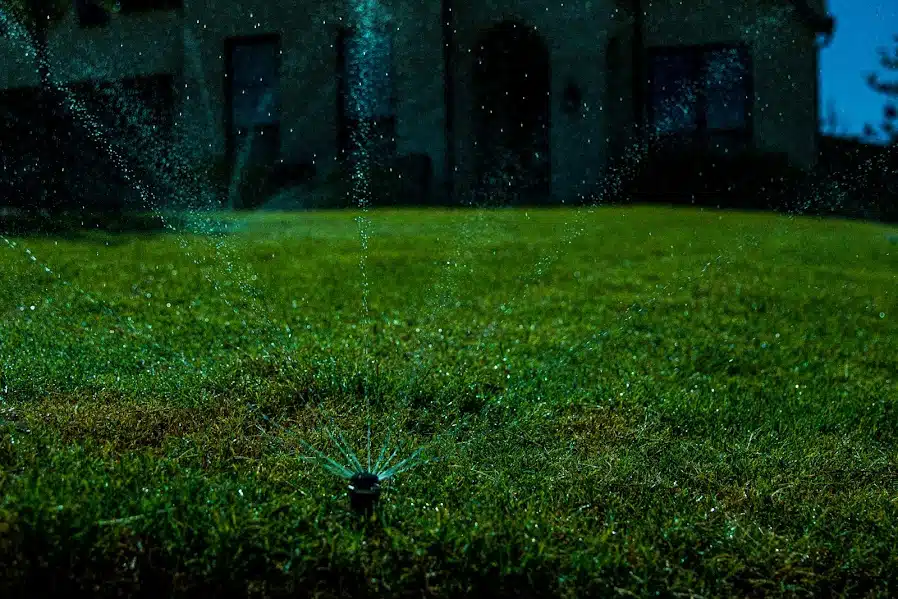
Efficient Irrigation Systems provides same-day sprinkler repair in Plano, TX, led by Texas Licensed Irrigator Aston Hannah (LI18555). Our technicians repair broken sprinkler heads, leaking valves, faulty controllers, underground pipe leaks, and backflow preventers across all seven Plano ZIP codes, and every repair is backed by a 1-year workmanship warranty. Call (469) 825-3909 to schedule.
Why Do Sprinkler Systems in Plano Break Down So Often?
Plano sits on Blackland Prairie clay soil that swells when wet and shrinks when dry, and that constant movement is the single biggest reason local irrigation systems fail. As the clay heaves and settles through North Texas wet-dry cycles, buried PVC mainlines flex at their joints, pop-up heads tilt out of plumb, and swing joints slowly fatigue until they crack. Sudden winter cold snaps add a second stress: a hard freeze can rupture an uninsulated above-ground backflow preventer or exposed riser overnight.
Age compounds the problem. Large portions of Plano’s housing stock were built in the 1970s through the 1990s, which means thousands of local irrigation systems are running on valves, wiring, and piping that are decades old. Components that were engineered for a 15 to 20 year service life are now well past it, and the original installation records are often long gone. That is why accurate diagnosis matters more in Plano than almost anywhere else in North Texas: replacing a sprinkler head does nothing if the real fault is a corroded wire splice two zones away.
What Sprinkler Repair Services Do We Offer in Plano?
We diagnose and repair every component of a residential or commercial irrigation system, from the controller on the garage wall to the last drip emitter in the flower bed. Every truck carries OEM parts for the brands most common in Plano homes, so the majority of repairs are finished in a single visit.
Broken and Damaged Sprinkler Head Repair
Cracked, clogged, or geysering heads are the most common repair call we receive in Plano. Heads fail from mower strikes, freeze damage, and simple age, and a single broken head can waste a surprising volume of water while starving the rest of its zone. We replace heads at the matched arc, radius, and flow rate of the original design so coverage stays balanced, and we pressure-test the zone before we leave. Learn more on our dedicated sprinkler head replacement page.
Sprinkler Valve and Solenoid Repair
When a zone will not shut off, or will not turn on at all, the valve is the usual suspect. We diagnose failed solenoids, split diaphragms, debris-jammed seats, and stuck manifolds, and we locate buried valve boxes with inductive locating equipment, which matters in older Plano neighborhoods where decades of landscaping have hidden the original manifolds. Replacement valves are matched to your system’s existing fittings and pressure-tested on the spot.
Controller and Smart Timer Repair
Blank displays, zones firing at random, and smart controllers stuck offline are all fixable, and usually in one visit. We service Hunter Hydrawise, Rain Bird ESP series, Rachio, and Orbit B-hyve units, and we can upgrade older timers to an EPA WaterSense labeled smart controller that adjusts automatically to weather. Every controller we touch leaves programmed to match the current City of Plano watering schedule.
Underground Leak Detection and Pipe Repair
Underground leaks are silent budget killers. The first symptom most Plano homeowners notice is a water bill that jumps for no visible reason, or a soggy patch that never dries between watering days. Using static pressure testing and zone isolation, we pinpoint mainline and lateral leaks without tearing up your lawn, then make a tight, targeted repair. Read more about our approach on the irrigation pipe leak repair page.
Backflow Preventer Testing, Repair, and City Compliance
Under Texas Commission on Environmental Quality (TCEQ) rules and City of Plano requirements, the backflow preventer that protects your drinking water must be tested by a licensed tester. We test pressure vacuum breakers, reduced pressure zone assemblies, and double-check valves, repair or replace failed units on the same visit, and handle the compliance paperwork so you never have to. If you have received a backflow notice from the city, call us before the deadline on the notice. Details are on our backflow preventer repair page.
Wire Tracing and Electrical Fault Repair
When a zone is dead but the valve tests good, the fault is almost always electrical: a corroded splice, a wire cut by a fence post or tree root, or a failed solenoid coil. We trace buried irrigation wiring with dedicated fault-locating equipment instead of exploratory digging, then rebuild the splice with waterproof direct-burial connectors rated for decades of service.
What Are the Signs You Need Sprinkler Repair?
If your lawn is developing brown patches while your water bill climbs, your sprinkler system is telling you something is wrong. Call a licensed irrigator if you notice any of the following:
- A sprinkler head that sprays sideways, bubbles weakly, or shoots a geyser straight up
- One zone that never turns on, or one that never shuts off
- Soggy, spongy ground or standing water between watering days
- A sudden, unexplained increase in your monthly water bill
- Uneven coverage: green stripes next to brown, dry strips
- A controller with a blank display, error codes, or a smart app showing the system offline
- Water pressure that has visibly dropped across every zone
Should You Repair or Replace Your Sprinkler System?
Repair is the right call for isolated failures on a structurally sound system; replacement makes sense when the underlying piping, valves, and wiring are failing together. A system under 15 years old with a broken head, a single bad valve, or a controller fault should almost always be repaired. A system from the 1980s or 1990s that needs a third valve replacement in two seasons, loses pressure across multiple zones, or was installed with materials no longer up to code is a candidate for staged replacement. We give you an honest read either way, and when replacement is the smarter investment we will show you exactly why. See our sprinkler installation page for what a modern, water-efficient system looks like, or explore drip irrigation for beds and foundation watering.
How Does Plano’s Watering Schedule Affect Your Sprinkler System?
From April 1 through October 31, the City of Plano limits sprinkler irrigation to a maximum of twice per week, with no watering between 10 a.m. and 6 p.m. Even-numbered addresses water on Mondays and Thursdays, and odd-numbered addresses water on Tuesdays and Fridays, with residents asked not to water during rain. The city publishes the current rules on the City of Plano website, and enforcement includes citations for watering outside the schedule.
A twice-weekly schedule leaves zero margin for a malfunctioning system. When you can only water two days a week, a stuck valve, a clogged nozzle, or a mistimed controller does not just waste water, it costs your lawn one of its only two drinks. That is why we reprogram every controller we service to match the current Plano schedule, including seasonal adjustments, cycle-and-soak run times suited to clay soil, and rain sensor verification.
What Happens When You Call Efficient Irrigation Systems?
- Describe the symptom. Tell us what you are seeing: a wet spot, a dead zone, a spiking bill. We schedule a licensed technician, with same-day appointments available for most Plano calls.
- Full-system diagnostic. We run every zone, test the controller, valves, and wiring, and isolate the true cause rather than the visible symptom.
- Clear approval before work. You get a straightforward explanation and a firm quote before any repair begins. We never start without your approval.
- Repair with OEM parts. We complete the repair with manufacturer-grade components carried on the truck, then pressure-test the affected zones.
- Schedule compliance check. Before we leave, your controller is verified against the current City of Plano watering schedule, and your repair is covered by our 1-year workmanship warranty.
Why Do Plano Homeowners Choose Efficient Irrigation Systems?
What We Offer | What It Means for You |
Texas Licensed Irrigator LI18555 (Aston Hannah) | Every repair meets the licensing requirement in Texas Occupations Code Chapter 1903, protecting your home, your insurance coverage, and your drinking water. |
Fully insured, locally owned | A Plano-based company at 1111 Jupiter Rd, accountable to the same community it serves, with crews working Collin County streets every day. |
Same-day service | Most Plano repair calls are diagnosed and completed the same day, so your lawn does not miss a watering day. |
Dozens of verified 5-star Google reviews and a strong Angi rating | Real, checkable feedback from Plano-area homeowners, not testimonials we wrote ourselves. |
1-year workmanship warranty | If a repair we made fails within a year, we make it right at no charge. |
OEM parts on every truck | Rain Bird, Hunter, Toro, Rachio, and K-Rain genuine components, so repairs last and warranties stay valid. |
Backflow compliance handled | Testing, repair, and city paperwork managed for you, keeping your water service in good standing. |
Two-county dispatch | Collin County at (469) 825-3909 and Grayson County at (903) 213-2757, one company across your whole area. |
Which Areas Near Plano Do We Also Serve?
From our Plano headquarters we provide same-day sprinkler and irrigation repair throughout Collin County, including Allen, Frisco, McKinney, Murphy, Wylie, Prosper, and Celina. Our Grayson County crew, based in Van Alstyne, covers Sherman, Denison, Howe, Gunter, and the surrounding communities. Wherever you are in our service area, the technician who arrives works under the same Texas Licensed Irrigator credential and the same 1-year workmanship warranty.
Frequently Asked Questions (FAQs)
How quickly can you repair a sprinkler system in Plano?
Most sprinkler repairs in Plano are completed the same day you call. Efficient Irrigation Systems dispatches licensed technicians across all seven Plano ZIP codes, and the majority of repairs, including broken heads, stuck valves, and controller faults, are diagnosed and finished in a single visit. Call (469) 825-3909 to check same-day availability.
Do I need a licensed irrigator for sprinkler repair in Texas?
Yes. Texas Occupations Code Chapter 1903 requires that irrigation work on any system connected to a potable water supply be performed under a Texas Licensed Irrigator credential issued through TCEQ. Efficient Irrigation Systems is led by Texas Licensed Irrigator Aston Hannah, license LI18555, so every Plano repair is fully compliant.
Why is one of my sprinkler zones not working?
A single dead zone is usually caused by a failed solenoid, a stuck or debris-clogged valve, or a broken wire between the controller and the valve. Our technicians test the controller output first, then trace the wiring and valve with diagnostic equipment, so the true cause is confirmed before any parts are replaced.
Why did my water bill suddenly go up in Plano?
An unexplained jump in your Plano water bill often points to an underground irrigation leak or a valve that is not fully closing. Because these leaks run silently between watering cycles, they can waste thousands of gallons before you see standing water. A professional leak inspection can isolate the source in one visit.
What days can I water my lawn in Plano?
From April 1 through October 31, the City of Plano limits sprinkler irrigation to no more than twice per week. Even-numbered addresses water on Mondays and Thursdays, odd-numbered addresses on Tuesdays and Fridays, and no watering is allowed between 10 a.m. and 6 p.m. We program every controller we service to match the current schedule.
Do you repair all sprinkler system brands?
Yes. Efficient Irrigation Systems repairs and services every major residential irrigation brand found in Plano homes, including Rain Bird, Hunter, Toro, K-Rain, Rachio, Orbit B-hyve, and Hunter Hydrawise smart controllers. Our trucks carry OEM replacement heads, valves, solenoids, and fittings so most repairs are finished without a second trip.
What is a backflow preventer, and why does Plano require testing?
A backflow preventer stops irrigation water from siphoning back into the drinking water supply. Under TCEQ rules and City of Plano requirements, irrigation backflow assemblies must be tested by a licensed tester. Efficient Irrigation Systems tests, repairs, and replaces backflow preventers and handles the compliance paperwork for Plano homeowners.
When should I winterize my sprinkler system in Plano?
Winterize before the first hard freeze, which typically arrives in North Texas between late November and mid-December. Draining the system and insulating the above-ground backflow preventer protects pipes and valves from freeze damage. Efficient Irrigation Systems offers seasonal winterization and spring start-up service throughout Plano and Collin County.
Is sprinkler repair the same as irrigation repair?
Yes, the two terms describe the same service. Homeowners usually search for sprinkler repair, while the State of Texas and TCEQ use the term irrigation, licensing professionals as Licensed Irrigators. Both cover sprinkler heads, valves, controllers, wiring, drip lines, underground piping, and backflow preventers on residential and commercial systems.
How do I schedule sprinkler repair with Efficient Irrigation Systems?
Call (469) 825-3909 for Plano and Collin County or (903) 213-2757 for Grayson County, or request service through the contact page at eis-tx.com/contact-us. Describe the symptom you are seeing, and our team will schedule a licensed technician, with same-day appointments available for most Plano service calls.
Schedule Your Sprinkler Repair in Plano Today
If your sprinkler system is leaking, will not turn on, will not shut off, or simply is not covering your lawn the way it used to, do not wait for the next water bill to confirm the problem. Efficient Irrigation Systems is Plano’s licensed, insured, locally owned sprinkler repair company, with same-day service and a 1-year workmanship warranty on every job. Call (469) 825-3909 for Plano and Collin County, call (903) 213-2757 for Grayson County, or request service through our contact page and we will get a Texas Licensed Irrigator to your door.
