

Irrigation and Drainage for Fresh North Texas Sod: A New Homeowner’s Guide
Published at July 29, 2026 | Category: Irrigation and Drainage
Congratulations on your new home in Celina, Prosper, or McKinney. New construction across these fast-growing Collin County cities shares a set of challenges: freshly disturbed soil that is still settling, a thin layer of builder topsoil over dense clay, and a grade that was rough-cut to pass inspection rather than fine-tuned for a real lawn. Add fresh sod and North Texas watering rules, and the difference between a lawn that thrives and one that struggles usually comes down to how the irrigation, drainage, and grading were set up first. This guide walks through what matters, and in what order.
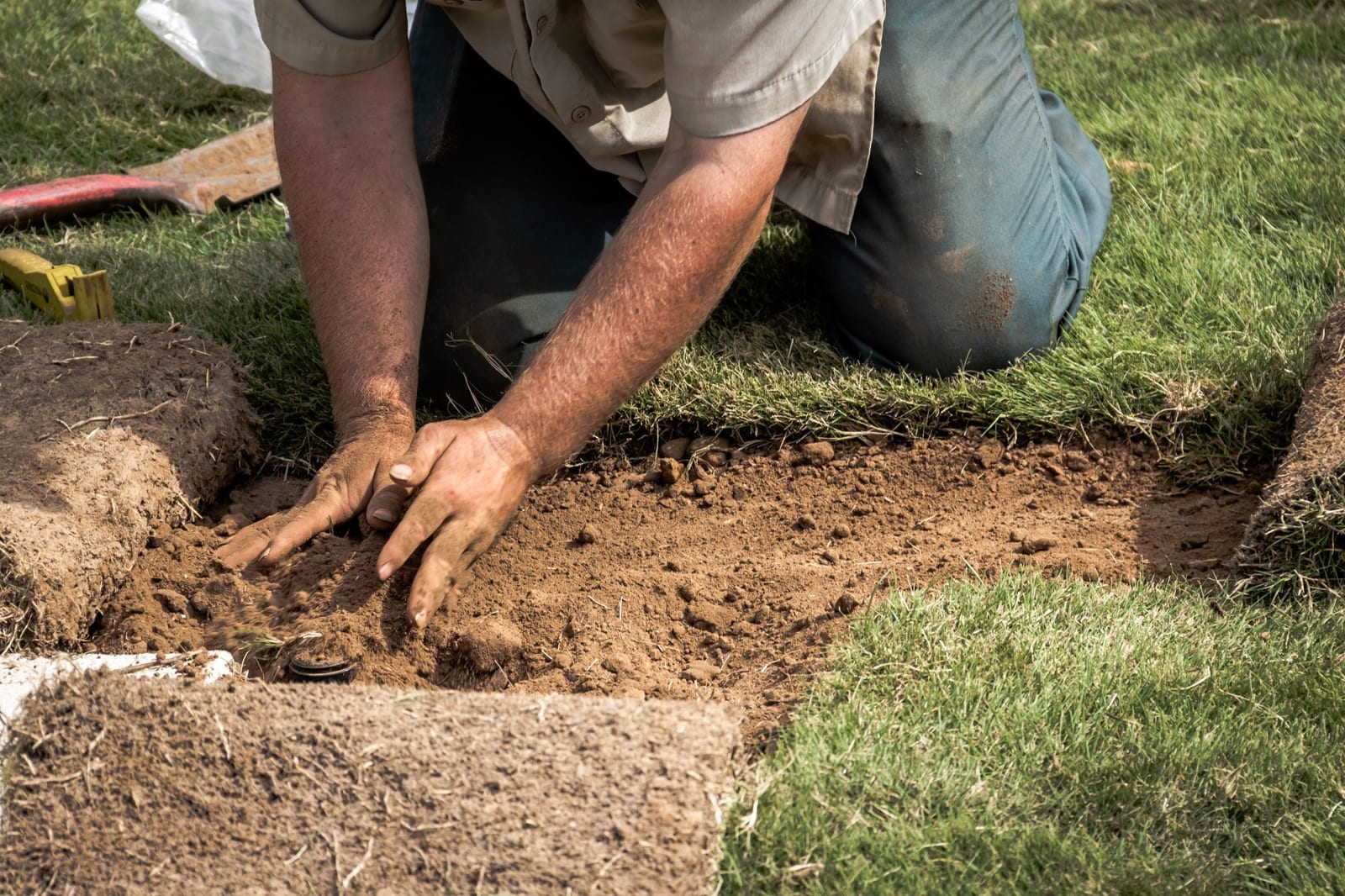
Why New Homes Here Need a Real Irrigation and Drainage Plan
New homes need extra attention because the yard has just been through construction, not landscaping. Builders grade a lot to pass final inspection, but that rough grade rarely accounts for a full sprinkler layout, bed edges, and sod. The topsoil is often a thin skin over a compacted clay pad, and during the first year it keeps settling, especially over utility trenches and around the foundation. That makes the first year your window to get grade, drainage, and irrigation right, before hardscape and plantings lock the yard in place and correcting it means tearing finished work back out.
The Soil Under Your New Lawn: Blackland Prairie Clay
Most of Celina, Prosper, and McKinney sits on Blackland Prairie clay, one of the most expansive soils in the country. The dominant series is Houston Black, the Texas state soil and a classic vertisol built on smectite clay. It swells when wet, shrinks and cracks when dry, and drains very slowly, so water tends to pool and run off rather than soak in. That has two consequences for a new lawn. Water pooling near the slab makes the clay swell unevenly, which is why grading and drainage protect your foundation, not just your grass. And because the clay drains so slowly, it is easy to overwater fresh sod and drown the shallow new roots.
For the science behind this, the USDA Houston series description documents the high clay content, slow permeability, and shrink-swell behavior across the region.
The Right Order: Grade, Drain, Irrigate, Then Sod
Set up a new lawn in this order: grade, then drainage, then irrigation, then sod. Each step sets up the next.
- Grade first. Establish a slope that carries water away from the house before anything else goes in the ground.
- Install drainage. Address low spots and problem areas with the right drainage system while the yard is open and easy to trench.
- Install or tune irrigation. Design and install a sprinkler system, or audit and adjust a builder-installed one, while the ground is bare and coverage gaps are easy to see and fix.
- Lay sod last. With grade, drainage, and water delivery handled, sod goes down onto a surface engineered to keep it alive.
Out of order, costs add up fast: installing irrigation after sod means digging up new grass, and sodding before the grade is fixed traps soggy low spots under the lawn.
Grading and Drainage That Protect Your Foundation and Your Sod
Good grading moves water away from your foundation, and the right drainage handles what the grade alone cannot. A common residential target is for the ground to fall about 6 inches over the first 10 feet from the foundation, with a gentle 2 percent slope across the rest of the yard so water keeps moving toward the street or an outlet. On slow-draining Blackland clay, grade alone is often not enough, which is where purpose-built drainage comes in.
- French drains to intercept and carry away surface and subsurface water before it reaches the foundation.
- Channel drains and catch basins to capture water at low spots, along driveways and walkways, and at patio edges.
- Sump pumps for lots where water collects faster than it can drain away by gravity alone.
EIS builds these into a single plan through its yard drainage solutions. Handling the water going in (irrigation) and the water coming out (drainage) together is where a company that does both has a real edge over a crew that only lays turf.
Why Texas Law Requires a Licensed Irrigator
In Texas, only a licensed irrigator can legally install a sprinkler system connected to your water supply. State rules say no one may sell, design, install, alter, or repair an irrigation system unless licensed, and doing so without a license can be treated as a Class C misdemeanor. A permit is required before installation, and once the system is in, a certified tester must test the backflow assembly so your irrigation cannot contaminate the drinking-water supply. Rain and freeze sensors are required too.
Efficient Irrigation Systems is a licensed Texas irrigation company (TCEQ Landscape Irrigator License LI18555), so your new sprinkler installation is designed to code, permitted, and backflow-tested. You can read more about the state requirements from the TCEQ cross-connection and backflow program.
Watering Fresh Sod Under North Texas Restrictions
New sod needs frequent water to root, but North Texas limits outdoor watering to two days a week, so you will want a variance. The North Texas Municipal Water District, which supplies McKinney and much of the surrounding region, limits spray irrigation to no more than two days a week and bans watering between 10 a.m. and 6 p.m. Even-numbered addresses generally water Monday and Thursday, odd-numbered Tuesday and Friday. Fresh sod cannot survive on two days a week while it establishes.
The fix is simple: most cities offer a new-landscape variance allowing daily watering for roughly the first 30 days while sod roots, so contact your city water utility before installation and keep proof of your sod purchase. Helpfully, Texas Property Code Section 202.007 also bars your HOA from fining you for a brown or dormant lawn caused by following mandatory restrictions. Confirm the current schedule through the NTMWD water-efficient irrigation guidelines.
A few coverage notes for this climate: warm-season varieties such as Bermuda (including TifTuf), Zoysia, and St. Augustine all handle North Texas heat well. Whatever you choose, sprinkler heads must be reset to the finished turf height after sod raises the grade, or they will spray sideways instead of over the lawn. For beds and borders, drip irrigation waters efficiently while staying within the rules.
Planning a new lawn in Celina, Prosper, or McKinney? Call Efficient Irrigation Systems at (469) 825-3909 to have your grade, drainage, and irrigation set up before the sod arrives.
When to Call Efficient Irrigation Systems
Efficient Irrigation Systems sets up irrigation, drainage, and sod-ready yards across Celina, Prosper, McKinney, and the rest of Collin County. As a licensed Texas irrigation company (LI18555) that handles irrigation and drainage in-house, EIS designs your grade, sprinklers, and drains to work together instead of leaving you to coordinate separate crews, and the team is local to Collin County with an office in Plano.
New-construction homeowners get the most value by bringing EIS in during the bare-dirt phase, before sod, when every part of the plan is easiest and most affordable to fix. You can read recent local feedback on the Efficient Irrigation Systems Google reviews page.
Get Your New Lawn Started the Right Way
Ready to set up your new Celina, Prosper, or McKinney lawn the right way? Call Efficient Irrigation Systems at (469) 825-3909 or reach out through our contact page to schedule an on-site evaluation. We will assess your grade, drainage, and irrigation before the sod goes down, so your new lawn starts strong and stays that way.
Frequently Asked Questions (FAQs)
Do I really need to set up irrigation and drainage for a brand-new home in Celina, Prosper, or McKinney?
Yes, in almost every case. New-construction yards in these Collin County cities are left with a rough construction grade, thin topsoil over dense clay, and soil that is still settling, so proper grading, drainage, and irrigation are what keep new sod alive and keep water moving away from your foundation. Setting this up before sod goes down is far easier and less costly than correcting it later.
Why does North Texas clay soil matter so much for my new sod?
Most of the region sits on Blackland Prairie clay, known as the Houston Black series, an expansive soil that swells when wet and shrinks when it dries. It also drains very slowly, so water pools easily and overwatering can drown new roots, which is why grading, drainage, and a properly designed watering schedule all matter for a new lawn.
What should I do first: grading, drainage, irrigation, or sod?
In that order: grade first, then drainage, then irrigation, then sod. Establishing the correct slope and installing drainage while the yard is open, then installing or tuning the sprinkler system before sod arrives, means you are not digging up new grass and water reaches every corner of the lawn.
How should my yard be graded around a new foundation?
The ground should slope away from the house, commonly falling about 6 inches over the first 10 feet, with a gentle slope across the rest of the yard so water keeps moving toward the street or a drainage outlet. On slow-draining clay, grading is often paired with French drains, channel drains, or a sump pump to handle water the grade alone cannot move.
Do I need a licensed irrigator to install a sprinkler system in Texas?
Yes. Texas law requires anyone who installs, alters, or repairs an irrigation system connected to your water supply to hold a state irrigation license, and installation requires a permit plus a backflow prevention test. Efficient Irrigation Systems is a licensed Texas irrigation company, TCEQ License LI18555, so your system is installed to code and properly backflow-tested.
How often can I water new sod under North Texas watering restrictions?
Standard rules across the region limit outdoor spray watering to two days a week, with no watering between 10 a.m. and 6 p.m. Because new sod needs more frequent water to root, most cities offer a new-landscape variance allowing daily watering for roughly the first 30 days, so contact your city water utility before installation and keep your proof of sod purchase on hand.
How long does new sod take to root in North Texas?
Fresh sod generally takes about two to three weeks to establish shallow roots and several weeks more to root deeply, depending on the season, grass type, and watering. The first week is the most critical, when the top inch or two of soil should stay consistently moist without saturating the clay underneath.
Can I install my own sprinkler system and drainage, or should I hire a professional?
Homeowners can maintain their own systems, but Texas requires a licensed irrigator to install a system tied to your water supply, and dense clay makes proper grading and drainage physically demanding and easy to get wrong. Hiring a company that handles irrigation and drainage together helps ensure your grade, sprinklers, and drains are designed to work as one system.
What drainage options work best for a North Texas yard that holds water?
The right solution depends on where and why water collects. French drains intercept and carry water away, channel drains and catch basins capture it at low spots and along hardscape, and sump pumps move water on lots where it gathers faster than gravity can drain it. Efficient Irrigation Systems evaluates the yard and recommends the combination that fits your property.
How do I schedule irrigation and drainage service in Celina, Prosper, or McKinney?
Call Efficient Irrigation Systems at (469) 825-3909 or use the contact form on the website to request an on-site evaluation. For new construction, the best time to call is during the bare-dirt phase before sod is laid, when grading, drainage, and irrigation are easiest and most affordable to address.
